
Inherited Culture
Culture • Heritage • Youth
RESULTS

Games & tools for learning

Our teams created playful tools that turn history, archaeology and cultural heritage into live, interactive experiences for young people, families and communities.
Legacy Stories

“The History Hackers’ Handbook”

Download the book (PDF)
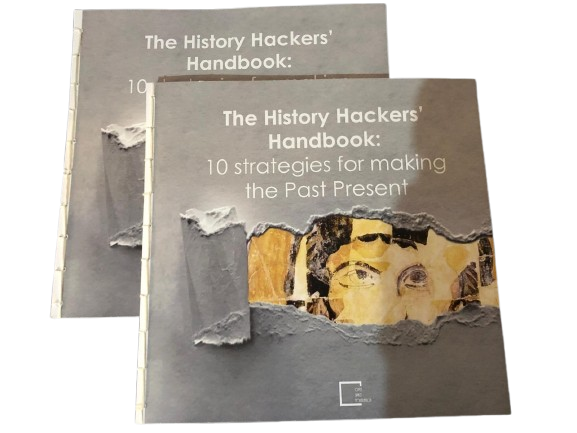
Cover of The History Hackers’ Handbook – 10 Strategies for making the Past Present
Handbook • Games & tools • Heritage

“The History Hackers’ Handbook” is a guide for heritage ambassadors.

“The History Hackers’ Handbook: 10 Strategies for making the Past Present” was created within the framework of the “Inherited Culture” project.

The book contains a comprehensive description of the good practices and methodologies collected and used during our work with 9 volunteer teams in the period 2023–2025, at three key archaeological sites in Bulgaria: Heraclea Sintica, Veliki Preslav and Misionis.

The main focus of the handbook is on cultural heritage:

  • Why should we preserve it?
  • How can it help the development and self-determination of young people?

The handbook offers concrete tools, ready-made activities and reflections that educators, youth workers and museum teams can adapt to make history feel present, playful and meaningful.

Legacy Hunt

The “Legacy Hunt” App: History is your next treasure

Mobile app • Treasure hunt games

In a world that values mobility and immediate engagement, “Legacy Hunt” emerges as an innovative mobile application created with the ambition to transform history and historical sites into a fun and interactive experience. We bridge the gap between passive sightseeing and active discovery through the power of gamification.

Concept: the “Treasure Hunt” can hold high historical value

The “Legacy Hunt” application allows for the uploading of online “Treasure Hunt” games that not only test users’ knowledge but also enrich them with new and unexpected historical facts. Our main goal is to provoke interest in objects important to a given city or location and to encourage users to physically visit them, revealing details that would otherwise go unnoticed.

We believe that free and engaging content is the key to making history accessible, especially for young people. The greatest advantage is that once created, the games are permanently available to visitors of the museum or historical site and can be used independently, without the need for an operator or specialized personnel.

What are the functionalities of our digital adventure?

“Legacy Hunt” transforms a casual walk into a dynamic mission, combining diverse tasks that require both intellect and physical presence:

  • Information quiz – Question and selection from possible answers;
  • Visual solving – Assembling a puzzle related to an artefact or object;
  • Physical search – Finding a location via GPS coordinates;
  • Photo proof – A photo that must be taken of a specific detail/place;
  • Extended learning – Scanning a QR code for additional information, followed by a question.

Competition and community

The application is designed to sustain a healthy competitive spirit, but also a community:

  • Rewards and ranking: a reward is given for every solved task, and users are ranked according to accumulated points and play time (personal time is tracked).
  • Format: each game can be played in an individual or team format.
  • Competitive mode: it is possible to create a competition where players/teams can monitor the progress of their opponents in real-time (by time and points).

“Legacy Hunt” for everyone

The application has enormous potential for use by a wide range of users:

  • Families and tourists – for fun time spent during tourist visits, where results can be compared with those of other users who played before them.
  • Education and business – for groups of students or companies/employees as an innovative team-building exercise that perfectly combines fun, teamwork and educational elements.

“Legacy Hunt” leads you through a historical adventure with the accumulation of knowledge and the pleasure of the game.

DIG IT!

“Dig It”: Rediscover History in the “Living classroom”

Board game • 3–8 players

In an era where young people seek active and engaging learning, the board game “Dig It” offers the ideal bridge between theoretical knowledge and exciting practical archaeology. This game transforms the learning process into a race against time and, simultaneously, an exercise in cooperation.

Game concept

You are leading archaeologists struggling with the approaching deadline for publishing a scientific paper about your latest excavation. You have only 25 minutes (measured by an hourglass) to complete your dig and prepare the report.

“Dig It” balances cooperation and individual ambition:

  • Cooperation: Players must donate Volunteer cards to the excavation site they are participating in (The Excavation). The accumulated total number of volunteers determines how many archaeologists will be cited as authors in the scientific paper. If not enough volunteers are gathered, everyone loses!
  • Individual ambition: To earn the right to be cited, you must collect Artefact cards. Ultimately, only those with the largest collections of artefacts will become famous authors.

The game is designed for 3 to 8 players and contains 120 Volunteer cards, 100 Artefact cards, 48 Special Find cards, an Hourglass (25 minutes), and the Archaeologist figure, which determines where actions are performed on the field.

“Dig It” in History class: your gamification tool

The structure of “Dig It” makes it ideal for use in an educational environment, following the principles of gamification and experiential learning discussed in modern pedagogy.

The game provides:

  • Teamwork under pressure: Students learn to manage time and resources (Volunteers) together while pursuing their personal goals (Artefacts).
  • Decision making: Players must decide when to donate Volunteers (for the common victory) and when to collect Artefacts (for personal glory), reflecting the real-life challenges of scientific work.

Educational kit: Personalization for every lesson/unit

For the needs of educators, the “Dig It” game is offered in a special Educational kit which includes blank “Special Find” cards.

Classroom application: The teacher can prepare questions related to specific study material to be drawn when landing on a “Special Find” tile.

Review and testing: After the completion of each unit (e.g., “Ancient Greece,” “The Second Bulgarian Empire,” etc.), the game transforms into an exciting and fun review and preparation for a test. The correct answer to the question can be a condition for receiving a bonus Artefact or Volunteer.

With “Dig It,” history steps out of the textbook pages and becomes a dynamic, competitive, and memorable experience that encourages critical thinking and a passion for the past.

Watch

Stories in motion: project videos

Volunteers in Veliki Preslav, Bulgaria, 2023

Inherited Culture 2023 bring volunteers from 9 EU countries to help in the second old capital of Bulgaria - Veliki Preslav (The Great Preslav) in archaeological excavations.

Volunteers in Turgovishte town, Bulgaria 2023

Inherited culture 2023 bring volunteers from 9 EU countries in Tirgovishte town, Bulgaria to help in archaeological excavations in fortress Missionins.

Volunteers from "Inherited Culture, Petrich" 2023

Young people from 9 countries were in Bulgaria to help in the archaeological excavations. See what they did and why you must visit Petrich town and Ancient city Heraclea Sintica.

Where history and nature meet

Step into the past with our volunteer, Mia Kostova, as she explores the magnificent ruins and breathtaking landscapes of Veliki Preslav, Bulgaria.

Discover Petrich Your Invitation to Adventure

Ready to explore a hidden gem in Bulgaria? This short film invites you to discover Petrich and its surrounding region. Editor: Mia Kostova

From Volunteer to Voyager

Ever wondered what it's like to unearth history with your own hands? Join our former volunteer Bulut as he shares his personal journey with the "Inherited Culture" project.